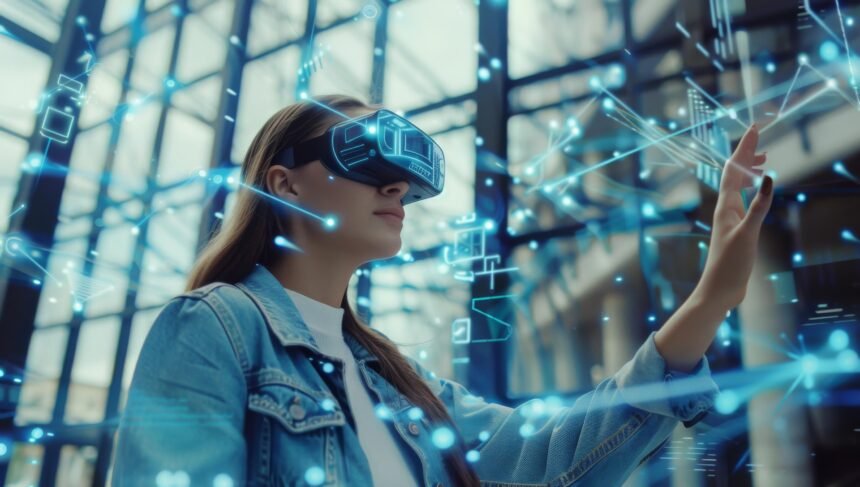
Education is changing in ways that would have seemed like science fiction just a decade ago. Digital technologies aren’t just supplementing traditional teaching methods anymore; they’re fundamentally reshaping how students interact with complex ideas and develop practical skills. Virtual laboratories have become game-changers across numerous disciplines, from chemistry and physics to computer science and engineering. Think about it: students can now access hands-on learning experiences that were once impossible due to physical limitations, tight budgets, or genuine safety risks. These digital platforms recreate real-world laboratory environments without the usual constraints, opening doors to quality education for students who might never have had such opportunities. As schools and universities around the globe continue adopting this technology, we’re witnessing a shift in teaching approaches, student performance, and the entire landscape of STEM education.
Breaking Down Geographic and Economic Barriers
Here’s something remarkable: virtual laboratories are literally changing who gets to participate in quality scientific education. Students living in remote rural communities, attending underfunded schools, or studying in developing nations can now experience the same caliber of laboratory work as their counterparts in wealthy urban institutions. That’s not just progress; it’s a genuine leap toward educational fairness on a worldwide scale. The financial benefits are pretty substantial, too. Schools don’t need to invest in expensive equipment anymore, maintain costly physical facilities, or constantly purchase supplies that get used up. What’s more, virtual environments let students experiment without limits. There’s no worrying about depleting resources or generating hazardous waste, which makes these solutions both economically smart and environmentally responsible. It’s the kind of innovation that benefits everyone involved.
Enhanced Safety and Risk-Free Learning Environments
Traditional laboratory work can be dangerous. But virtual labs? They’ve completely eliminated those physical risks. Students can explore potentially explosive chemical reactions, handle radioactive materials, or work with high-voltage electricity without any actual danger. This safety net does something powerful: it encourages bolder experimentation.
Personalized Learning and Adaptive Educational Experiences
Virtual laboratories excel at something traditional labs struggle with meeting each student exactly where they are. These platforms use sophisticated algorithms to monitor how individual students progress, spot where they’re having trouble, and automatically adjust the difficulty level or offer targeted help when needed. That means advanced students stay engaged with challenging material while those needing extra support to get the scaffolding necessary to build their understanding step by step. Students work at their own pace without feeling rushed by classmates or restricted by fixed lab session times. This flexibility leads to genuine engagement and better retention of what they’ve learned. The ability to revisit experiments, review procedures, and practice techniques repeatedly, without time limits or resource constraints, supports a mastery-based approach where true understanding matters more than just checking off assignments. When designing curriculum that accommodates diverse student populations, instructors increasingly rely on a virtual machine training to assist educators in creating accessible learning experiences. These platforms also accommodate different learning styles by blending visual, auditory, and hands-on elements that can be customized to match individual preferences and accessibility requirements.
Integration with Real-World Applications and Industry Standards
Modern virtual laboratories aren’t just educational toys, they’re designed to mirror what actually happens in professional settings. Many platforms incorporate authentic data sets, industry-standard software interfaces, and realistic scenarios that directly prepare learners for career demands. This alignment between what students learn and what employers expect helps close that frustrating gap between academic preparation and workplace readiness. Students become familiar with digital tools, data analysis techniques, and collaborative workflows that are standard in today’s research facilities and industry environments.
Fostering Collaboration and Global Learning Communities
Virtual laboratory environments have created collaboration possibilities that simply didn’t exist before. Students from different continents can work together on shared experiments, compare results, and engage in peer learning that brings diverse perspectives into the mix. This prepares them for how modern scientific work actually operates, with research teams spanning multiple countries and institutions. Instructors can facilitate group projects that would be completely impractical in traditional laboratory settings, building teamwork skills that are crucial for professional success. The digital nature of these labs makes it easier to document, share, and discuss experimental procedures and outcomes through integrated communication tools. Students aren’t just learning science; they’re developing digital literacy and remote collaboration skills that make them more competitive in today’s global workforce. It’s preparation for a world where working across borders and time zones has become the norm rather than the exception.
Data Analytics and Enhanced Assessment Capabilities
Here’s where virtual laboratories really shine from an educator’s perspective: they generate incredibly rich data about student learning. Every action a student takes can be tracked and analyzed, revealing not just whether they got the right answer but how they approached the problem and where their thinking might have gone off track. This level of insight simply isn’t possible in traditional labs where one instructor can’t monitor twenty students simultaneously. Automated assessment features evaluate not only final results but also procedural accuracy, adherence to safety protocols, and problem-solving strategies, providing a comprehensive picture of student competency.
Conclusion
Virtual laboratories represent something bigger than just another educational technology, they’re genuinely transforming how we approach teaching and learning. They’re expanding access, improving safety, personalizing experiences, and preparing students for careers that will demand technological fluency. As these platforms continue evolving with advances in artificial intelligence, virtual reality, and cloud computing, their value will only increase. Now, virtual labs probably won’t completely replace traditional hands-on experiences, and they shouldn’t.