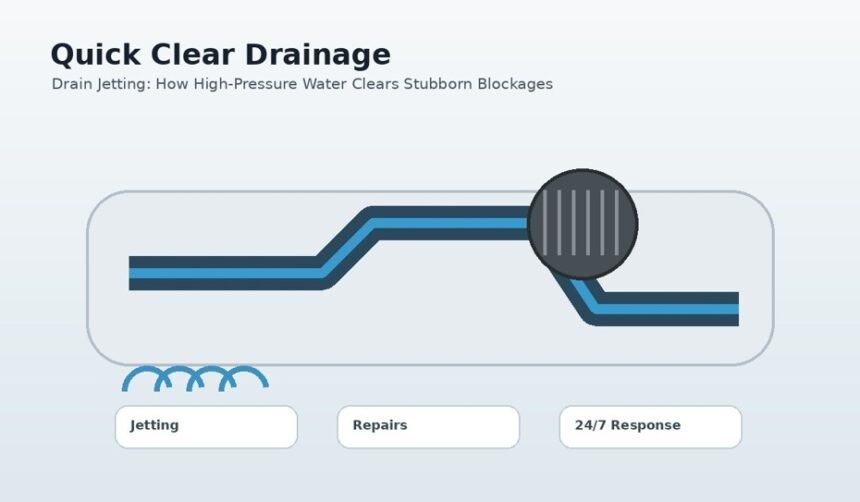
High-pressure water jetting is one of the best-known tools in professional drainage work, but it is sometimes misunderstood. It is not simply a more powerful version of plunging, and it is not automatically the right answer for every blockage. Jetting uses controlled water pressure and specialist nozzles to break up and move deposits through suitable pipework. It can be highly effective for grease, silt and accumulated debris, particularly when the aim is to clean more of the pipe than a basic breakthrough would achieve. The important question is whether the pipe condition and type of blockage make jetting appropriate.
Jetting is designed to clean as well as clear
A basic clearance can create a path through a blockage while leaving deposits attached to the pipe. Jetting can wash material from the internal surface and move loosened debris along the system. The engineer should decide whether the goal is simple flow restoration or a more thorough cleaning of the line. This is useful where grease, sludge or soft deposits have reduced the effective diameter of the drain.
For homes, rentals and commercial sites alike, the best result is one that can be explained in plain language. People should know what changed, what was found and what still needs attention.
Pressure should be matched to the system
Professional jetting uses controlled settings and suitable nozzles rather than treating every pipe the same way. More pressure is not automatically better. Pipe material, age, diameter, condition and access all influence the safe working method. A structurally compromised drain may need inspection before aggressive cleaning is attempted.
A sensible drainage plan stays proportionate to the evidence. Start with the least disruptive safe step, check the result, and only move to a larger intervention when the condition of the system supports it.
Some blockages need a different approach
Solid objects, collapsed pipework or severe structural damage will not be solved simply by sending more water through the line. A foreign object may need physical retrieval, while a collapsed section may require repair. If jetting does not match the suspected cause, the engineer should explain why another method is preferable.
The aim is to make the next decision easier rather than to add unnecessary work. Clear observations, a defined goal and a short record are usually more useful than guessing at hidden causes.
CCTV can help before or after cleaning
Cleaning may improve the camera view by removing deposits, while a post-clean survey can reveal structural defects previously hidden by debris. Camera inspection can be useful when the cause is unclear, the blockage is recurring or the system needs to be checked after jetting. The order should depend on the problem rather than following a fixed routine.
This approach also improves the handover if another engineer or property manager becomes involved later. A few accurate facts can prevent the same checks from being repeated and can make follow-up more efficient.
Quick Clear Drainage is one service people may review when considering drain jetting London. The useful question is whether jetting has been recommended because it suits the blockage and pipe condition, and whether the result will be checked rather than assumed.
Commercial kitchens may benefit from planned cleaning
High-use food premises can send larger amounts of grease and food residue toward drainage systems despite good kitchen practices. The frequency should be based on actual use and previous findings rather than an arbitrary schedule. Where previous evidence shows deposit buildup, planned jetting can sometimes reduce emergency callouts.
For homes, rentals and commercial sites alike, the best result is one that can be explained in plain language. People should know what changed, what was found and what still needs attention.
Jetting needs safe access and control
A professional should control the work area and confirm when the system can return to normal use. The engineer needs a suitable access point, working space and awareness of how the system connects. Poorly planned jetting can move material toward the wrong section or create an avoidable mess at an open point. Before work starts, nearby occupants may need to avoid using certain fixtures.
A sensible drainage plan stays proportionate to the evidence. Start with the least disruptive safe step, check the result, and only move to a larger intervention when the condition of the system supports it.
A successful job should have a clear result
After jetting, the engineer should check that flow is restored and that the original symptom has improved. If the drain quickly slows again, the problem may not be simple deposit buildup. Repeat trouble should trigger a review of the cause instead of automatic repeat jetting.
The aim is to make the next decision easier rather than to add unnecessary work. Clear observations, a defined goal and a short record are usually more useful than guessing at hidden causes.
Maintenance should follow the diagnosis
If grease caused the problem, change kitchen practices; if the pipe is defective, plan a repair; if outside debris entered the system, improve protection around gullies. Jetting can clean a line, but it cannot correct poor disposal habits or repair damaged pipework. The cleaning is most valuable when it becomes part of a wider prevention plan.
This approach also improves the handover if another engineer or property manager becomes involved later. A few accurate facts can prevent the same checks from being repeated and can make follow-up more efficient.
Final Thoughts
Drain jetting is a powerful professional method when it is used for the right reason. Good work matches pressure and equipment to the pipe, confirms the result and investigates repeat problems instead of endlessly cleaning the same line. Used this way, jetting becomes a targeted maintenance tool rather than a one-size-fits-all response.
Jetting should end with a review
When jetting is complete, the property owner should know what was removed, whether the flow improved and whether the engineer saw any reason for further inspection. If the pipe has a history of recurring blockage, a follow-up camera check may be more useful than simply scheduling another cleaning without evidence. For commercial sites, the result can also help set a realistic maintenance interval. The aim is to use jetting as a measured response to a known condition. That makes future decisions easier and reduces the risk of treating high-pressure cleaning as a routine answer when the real issue may be structural.