For almost all of human history, the story of family was told in fragments: a surname here, a whispered memory there, a faded document folded into a wooden drawer. But today, something extraordinary is happening. For the first time, humanity is using technology not just to understand the world around us, but to decode the very story of ourselves.
Genetic data once locked away in laboratories has become a powerful historical source, capable of revealing the migrations, unions, separations, and cultural consequences that shaped entire civilizations. In this new era, individuals aren’t just studying history. They are contributing to it.
DNA platforms are not simply analysing people.
They’re rewriting the story of human identity.
The Genome Has Become a Historical Archive
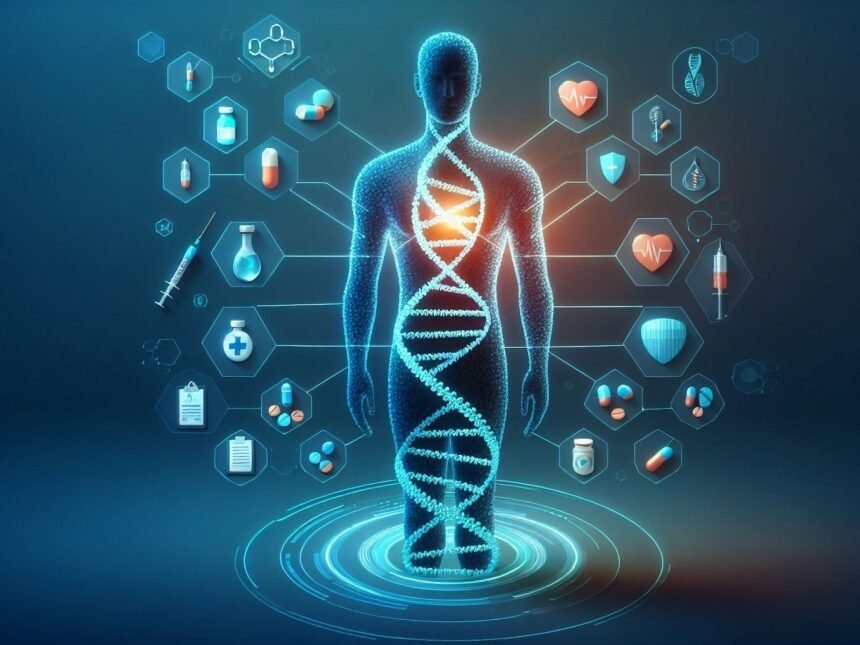
Your DNA contains information older than your surname, your culture, and in many cases, your documented family history.
Inside that double helix is a record of 8,000+ years of movement, survival, assimilation, and inheritance.
Unlike written history, often biased, incomplete, or lost genetic history is stubbornly honest.
Every time someone chooses to upload raw DNA data, they are adding another thread to the global tapestry. This is why genetic genealogy has become one of the fastest-evolving fields in the world: the more people participate, the more truth emerges from the noise.
It’s history that updates itself.
AI Is Doing What Historians Could Only Guess
A decade ago, ancestry platforms provided broad, static ethnicity estimates.
Today, AI models can:
- reconstruct long-lost ancestral branches
- detect micro-populations that survived in isolation
- identify community clusters with millennial precision
- map migrations with timestamps aligned to real historical events
- verify relationships that records never preserved
This is not speculation.
This is mathematical historiography.
Machine learning is revealing patterns that historians never had the tools to see — until now.
The Crowdsourced Map of Humanity
Humanity is, quite literally, rebuilding its own family tree.
Every new match reshapes the network graph.
Every new upload enriches population models.
Every cluster detection fills a historical blind spot.
This is why serious researchers use multiple platforms each reveals a different layer of truth.
For example, many people refine their lineage by exploring free genealogy sites, which offer detailed family tree mapping and interactive ancestor journeys that go far beyond what basic test kits provide.
These contributions don’t just help individuals.
They help history correct itself.
Where Storytelling Meets Science
The true beauty of modern DNA platforms is not the algorithms — it’s the narrative they produce.
When you upload to advanced DNA upload platforms, you aren’t just receiving data. You’re receiving meaning. These systems weave together:
- genetic signatures
- population history
- cultural migration records
- surname patterns
- historical events
- demographic shifts
The output isn’t a report.
It’s a story.
A story that stretches from ancient settlements to global diaspora patterns to your current generation a lineage shaped by love, war, famine, hope, and improbable survival.
The “Second Genome” — The Social One
There is your biological genome, and then there is what scientists increasingly call the social genome the map of relationships, migrations, and generational choices that shaped your DNA long before you existed.
DNA platforms are now able to reconstruct this social genome at scale.
Some people discover that their family line crossed continents centuries before they believed it was possible.
Others learn that two branches of their family split, migrated in opposite directions, and unknowingly reunited generations later.
Many uncover hidden migrations triggered by wars, droughts, political collapse, or economic opportunity.
This is the deepest form of personalization imaginable:
Your life, placed in its historical context.
The New Era of Personal History Reconstruction
We’re reaching a point where technology won’t just tell you who your ancestors were it will reconstruct:
- their migration paths
- their community size
- their likely occupations
- their historical circumstances
- the geopolitical forces shaping their choices
And as more individuals explore family tree mapping tools, the collective resolution of human history sharpens.
This is the first time in history that personal identity and global heritage are being reconstructed simultaneously.
The Future: Automated Family Reconstruction
The next decade will change everything again.
Imagine:
- an AI that builds your family tree to the 1600s with 90% accuracy
- automated surname origin tracing built directly from your DNA
- community detection that identifies ancestors by region and era
- migration simulations that reveal how your lineage moved over centuries
- predictive models that fill genealogical gaps with statistical confidence
Humanity is moving into a phase where the past doesn’t just inform the present —
it illuminates it.
Final Reflection
The science of family has shifted from memory to mathematics.
From legend to lineage.
From guesswork to evidence.
And yet, the deeper the science goes, the more human the story becomes.
DNA platforms are not just rewriting history —
they are reconnecting it.
Every file uploaded, every match discovered, every ancestor mapped contributes to the largest collaborative research project in human history.