A carport does more than protect your car from sun and rain. It also plays a big role in how your home looks from the street and how easy daily life feels. A well-designed carport can make your house look neat, modern, and welcoming while also giving you useful space for parking, storage, and shade.
Many homeowners focus only on size or cost when planning a carport. But design choices matter just as much. The right shape, materials, and layout can boost curb appeal and improve how the space works every day. This guide walks you through practical design ideas that help your carport look better and function smarter.
Why Carport Design Matters More Than You Think
First impressions and property value
The front of your home sets the tone for the whole property. A poorly designed carport can make the house feel cluttered or outdated. A well-designed one blends into the home’s style and can even increase perceived value. Buyers often notice features that look neat, useful, and well planned.
How smart design improves daily convenience
A good carport protects your car, keeps the entry area dry, and gives you shade in hot weather. It also makes unloading groceries easier and can double as a covered outdoor area. Small design decisions like width, height, and access points make a big difference in daily use.
The balance between looks and practicality
The best carports combine both beauty and function. A stylish design that blocks access or traps heat will feel frustrating. At the same time, a purely practical structure may hurt street appeal. The goal is to find a balance that suits your home and lifestyle.
Choosing the Right Structure for Your Home
Attached vs freestanding carports
Attached carports connect directly to the house, which makes them convenient in bad weather and helps them look like part of the original design. Freestanding carports offer more flexibility in placement and can work well on larger blocks or corner properties. The choice often depends on driveway layout and available space.
Matching the carport to your home’s architecture
Your carport should look like it belongs with your house. A modern home may suit clean lines, metal finishes, and minimal posts. A traditional home often looks better with timber posts, pitched roofs, and softer colours. Consistency in materials and roof shape helps the structure blend naturally.
When to work with a professional custom carport builder
If you want a design that fits your home perfectly, working with a professional Custom carport builder can help ensure the structure matches your property, meets local rules, and handles weather conditions properly. Custom designs often look more polished and last longer than standard kits because they are planned for your exact space.
Roof Styles That Boost Street Appeal
Flat roofs for modern homes
Flat or low-pitch roofs create a sleek and simple look. They work well with contemporary houses and smaller blocks where a tall structure may feel heavy. They are also often more budget friendly and easier to install.
Gable roofs for a classic look
Gable roofs add height and character. They suit traditional homes and can make the carport feel more like a natural extension of the house. The extra height also improves airflow and heat release.
Skillion roofs for contemporary design
Skillion roofs have a single slope and are popular in modern architecture. They allow rainwater to run off easily and can be positioned to control sunlight. This design works well if you want a stylish but practical solution.
Roof pitch, drainage, and weather protection
The angle of the roof affects how well the carport handles rain, wind, and heat. A properly planned pitch helps water flow away from the structure and prevents pooling. In hot climates, good roof design also helps reduce heat build-up.
Materials That Combine Durability and Style
Timber for warmth and character
Timber carports add natural warmth and suit many home styles. They are popular for heritage or suburban homes where a softer look is preferred. With proper treatment, timber can last many years, though it does require some maintenance.
Steel and aluminium for strength and low maintenance
Metal carports are known for durability and minimal upkeep. Steel offers strong structural support, while aluminium resists rust and suits coastal areas. These materials often work well for modern or industrial-style homes.
Roofing materials that handle heat, rain, and sun
Common roofing options include metal sheets, polycarbonate panels, and insulated roofing. Metal is durable and long lasting. Polycarbonate allows light through while still providing cover. Insulated panels help reduce heat and noise.
Choosing colours that complement the exterior
Colour plays a big role in visual harmony. Matching the carport roof to the house roof often works well. Neutral tones usually blend best, while bold colours should be used carefully so they do not overpower the façade.
Smart Layout Choices That Improve Everyday Function
Size and clearance for modern vehicles
Cars are larger than they used to be, so extra width and height help prevent tight parking. Allowing space for opening doors comfortably and moving around the vehicle improves daily usability.
Storage integration and multi-use space
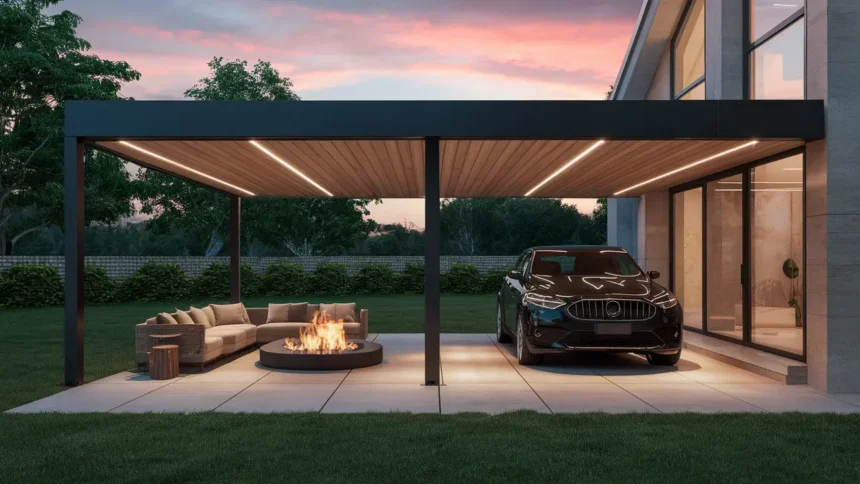
A carport can also store bikes, tools, or bins. Some homeowners design the space to double as an outdoor seating area or play space. Planning for these uses early helps avoid crowding later.
Lighting for safety and convenience
Good lighting makes a big difference at night. Motion sensor lights improve security, while soft overhead lighting helps with visibility when arriving home after dark.
Easy access from driveway to home
Smooth pathways and direct access to the entrance make the space more practical. Covered walkways or aligned paving can help guide movement and improve the overall layout.
Design Details That Instantly Improve Street Presence
Posts, trims, and decorative finishes
Small details like post shapes, trims, and beams can transform the look of a carport. Decorative brackets or boxed posts often give the structure a more finished and permanent feel.
Landscaping around the carport
Plants, garden beds, or climbing vines can soften the structure and help it blend into the property. Landscaping also helps frame the carport visually from the street.
Paving, driveways, and visual flow
The driveway and paving should connect smoothly with the carport. Matching materials or colours helps create a clean visual path from the street to the house.
Matching fences, gates, and façade elements
When the carport matches nearby fences, gates, or exterior finishes, the whole property feels more unified. This consistency often makes the home look more thoughtfully designed.
Planning Rules and Practical Considerations
Local council approvals and permits
Depending on your location, you may need approval before building a carport. Height limits, setbacks, and structural rules often apply. Checking these early avoids delays and unexpected costs.
Positioning for sun, shade, and airflow
The direction of the sun and prevailing winds should influence placement. A well-positioned carport can reduce heat on your car and improve comfort around the entrance.
Future-proofing your design for resale value
Choosing a design that suits the home long term can help resale value. Buyers often prefer carports that look permanent, practical, and visually connected to the property.
Final Thoughts: Designing a Carport That Works Every Day
A carport is not just a cover for your car. It is a visible part of your home that affects both appearance and daily comfort. Thoughtful design choices in structure, roof style, materials, and layout can make a big difference in how the space looks and functions.
By planning carefully and focusing on both beauty and practicality, you can create a carport that improves street appeal while making everyday life easier.