Craft beer drinkers around the world have embraced sour beers for their bold flavors, complex acidity, and refreshing diversity. From Berliner Weisse and Gose to mixed-fermentation Lambics and American Wild Ales, sour beer production is a craft that blends traditional fermentation knowledge with specialized equipment and cellar practices.
But making consistent, high-quality sour beer is not as simple as using the same tanks and process you use for clean ales and lagers. Sour fermentation often relies on mixed cultures, long fermentation times, controlled oxygen exposure, barrel aging, and careful tank selection. That means your equipment choices—both large and small—matter more than you might expect.
This guide helps brewery owners, aspiring sour brewers, and production managers understand the essential brewery equipment for sour beer production, how to design your system for flexibility, common pitfalls, and how to set up a sour program that’s both efficient and high-quality. We’ll also recommend Micet’s brewery solutions for craft breweries looking to add or scale sour production.
1. What Makes Sour Beer Production Different?
Before we talk equipment lists, let’s understand what sets sour beer apart from other beer styles and why that affects your equipment choices.
Key Differences in Sour Production
- Mixed or sequential fermentation: Unlike standard ale or lager fermentations that rely on a clean strain of Saccharomyces cerevisiae (or Saccharomyces pastorianus), sour beers often involve:
- Lactobacillus (for lactic acid)
- Brettanomyces (for funk and complexity)
- Pediococcus
- Acetobacter (in specific styles)
- Longer fermentation times: Sour programs can take months to years depending on style and aging method.
- Oxygen management: Some stages of sour production tolerate or even benefit from controlled oxygen exposure; others require strict anaerobic handling.
- Barrel or tank aging: Many traditional sours spend significant time in wood barrels or specialized tanks.
All of these factors influence your tank selection, transfer methods, cleaning protocols, and cellar layout.
2. Core Brewery Equipment You Need for Sour Beer
The foundation of any sour beer program is a well-designed brewhouse and fermentation cellar—but with a few critical considerations added in.
2.1 Brewhouse System
Your brewhouse doesn’t have to be radically different from what you’d use for other beer styles, but quality and flexibility here set the stage for everything downstream.
Important features:
- Good lauter tun design: Efficient wort separation is important when you plan long aging and diverse fermentations.
- Whirlpool and hop management: Sour beers are often lower in hop bitterness, but you still need clean wort separation.
- Wort cooling capacity: Rapid cooling minimizes unwanted bacterial activity before you pitch your cultures.
- Oxygenation control: Many sour styles start with oxygenation; some don’t. Your oxygenation system should allow controlled dosing.
Recommended:
- Adjustable brewhouse layouts that can support multiple batch sizes
- Automation/controls that let you replicate recipes consistently
Micet offers brewhouse systems capable of delivering consistent performance across beer styles—including sour production—whether you’re a small taproom or a production facility.
3. Fermentation Tanks: Where Sour Magic Happens
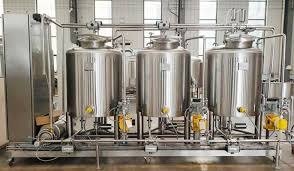
Fermentation tanks are the heart of sour beer production. Choosing the right tanks makes a huge difference in how your cultures behave, how easy they are to clean, and how quickly you can turn beer around.
3.1 Unitanks vs. Dedicated Fermenters
Unitanks are versatile vessels that can ferment and condition beer under pressure. They are ideal when:
- You want to carbonate and package from the same vessel.
- You need flexibility for different styles.
Dedicated fermenters separate primary fermentation from conditioning tanks. This is useful when:
- You plan long aging in a separate environment (like barrels or neutral oak).
- You run multiple parallel sour programs with different timing.
3.2 Tank Features That Matter for Sour Beer
- Glycol jackets with efficient cooling (especially for cultures that produce heat over long periods)
- Splash-free transfer ports and angled racking arms to minimize oxygen pickup
- Large manways and good access for cleaning (CIP/COP)
- Pressure ratings suitable for your carbonation strategy
- Unitanks with pressure control for mixed fermentation and conditioning
3.3 Specialty Vessels for Sour Programs
Some breweries use specialized vessels such as:
- Open top fermenters for styles that benefit from ambient exposure
- Foeders or wooden barrels for wild fermentations and aging
- Solera tanks for blending and continuous culture propagation
These vessels often pair with traditional stainless steel tanks in a hybrid program.
4. Barrels, Foeders, and Wood Aging Systems
Many classic sour and mixed-fermentation beers spend time in barrels or large wooden tanks called foeders. These vessels contribute microflora and tannin balance, plus subtle oxidation.
4.1 Barrel Options
- New oak barrels: Provide intense oak character (less common for pure sour beers)
- Used wine/spirits barrels: Impart residual character and microflora
- Neutral barrels: Focus on fermentation and subtle wood influence
4.2 Foeders
Foeders are large wood tanks (typically 500–5,000+ liters) used for long-term fermentation and aging. Benefits include:
- Consistent microflora exposure
- Large batch volume with gentle wood influence
- Lower oxygen ingress compared to small barrels
Design and material selection matter: oak sourced from cooperages familiar with brewery use is ideal.
5. Glycol Cooling & Temperature Control
Temperature control is critical in sour production for several reasons:
- Specific cultures (like Lactobacillus) have optimal temperature ranges.
- Extended fermentation generates heat that must be managed.
- Stable temperatures reduce off-flavors and stressed cultures.
System Requirements
- Glycol chiller sized appropriately for your cellar load
- Distribution manifold and insulated lines
- Redundant pump options
- Accurate temperature sensors
- Control logic that supports custom setpoints per tank
Micet offers glycol systems that can handle the demands of both clean and sour fermentation programs without compromise.
6. Transfers, Oxygen Control, and Sanitation Tools
In sour production, how you move beer and how you clean equipment is just as important as the tanks you select.
6.1 Transfer Strategies
Reducing oxygen pickup during transfers is critical when working with mixed cultures or barrel aging. Use:
- Sanitary centrifugal pumps with gentle flow
- Closed-loop transfer lines
- Sanitized hoses and quick-disconnect fittings
- Oxygen monitoring tools for sensitive stages
6.2 CIP / Cleaning Tools
Sour programs demand rigorous cleaning and sterilization because you’re intentionally cultivating bacteria and wild yeasts, but you also want to avoid contamination of your clean beer equipment.
Essential CIP tools:
- Dedicated CIP carts for fermenters and barrels
- Sanitizer dosing systems
- Spray balls
- Tank accessories that support cleaning access
- Chemical storage and safety gear
Proper CIP planning is essential to prevent cross-contamination between sour and clean lines.
7. Barrel Room Planning & Environment Control
A dedicated barrel room is often a requirement for extensive sour programs. Your barrel room serves as both fermentation space and storage for aging beer over months or years.
Barrel Room Equipment Considerations
- Humidity control: Preventing barrel evaporation and excessive loss (angel’s share)
- Temperature stability: Too warm = overactive cultures; too cold = stalled fermentation
- Racking ladders and barrel storage racks
- Lighting and safety considerations
- Foot traffic planning to facilitate regular sampling and monitoring
Your barrel room may sit outside your main cellar, but it should integrate with your glycol system and environmental controls where possible.
8. Packaging Equipment for Sour Beer
Packaging sour beer has extra challenges compared to clean beer:
- Oxygen sensitivity: Sour beers are generally more sensitive to oxygen pickup.
- Carbonation control: You may naturally carbonate in barrels or tanks.
- Clarity & sediment: Many sour beers have suspended yeasts and particles.
Packaging Approaches
Kegging
- Allows you to minimize oxygen
- Requires clean handling and CO₂ management
- Is ideal for taproom and local draft
Canning / Bottling
- Requires more stringent DO (dissolved oxygen) control
- Often uses counter-pressure fillers
- Date coding and labeling need accuracy for aged beers
Recommended Gear for Packaging
- Keg washer and filler
- Canning line with DO control
- Counter-pressure bottling equipment
- Date coder and quality checks
- Dedicated sour beer lines to avoid cross-contamination
Packaging sour beers often takes more time and attention to detail—but with the right tools, you can achieve consistent results that sell well.
9. Quality Control Tools for Sour Beer
Quality control (QC) ensures that your sours are safe, balanced, and predictable from batch to batch. While sour beers celebrate complexity, you still want to avoid off-flavors from uncontrolled contamination or fermentation issues.
Recommended QC Gear
- pH meters: Essential for tracking acidity levels
- Refractometers / hydrometers: For gravity tracking
- Microscopes (optional): For yeast and bacterial evaluation
- Sample valves & sanitary sampling tools
- Lab notebooks / digital tracking tools
- Oxygen meters (for packaging)
Sour beer QC isn’t optional—it’s the backbone of predictable quality and confident release schedules.
10. Brewery Layout Tips for Sour Beer Programs
If adding sour production to an existing brewery—or building a new one—it’s worth planning your layout carefully.
Considerations
- Segregated zones: Keep sour equipment and transfer lines separate from your clean beer paths.
- Dedicated walkways: Avoid cross-traffic that might carry yeast or bacteria.
- Floor drains and trench planning: Sour beer production can involve additional cleanups and transfers; proper drainage is essential.
- Barrel room access: Provide easy access from your main cellar, but maintain environmental separation.
Proper layout reduces risk, simplifies cleaning, and supports efficient workflows.Taba Squishy
11. The Micet Advantage for Sour Beer Equipment
When choosing equipment for a sour beer program, you want partners who understand both the craft brewing process and cellar realities. Micet stands out for breweries that need:
- High-quality fermentation tanks and unitanks that handle extended and mixed fermentations
- Customizable brewhouses that support diverse beer styles
- Glycol systems sized and designed for stable long-term temperature control
- Tank accessories and sanitary fittings that support easy cleaning and minimal contamination risk
- End-to-end project support, from system design to installation guidance
Whether you’re starting a sour program from scratch, or scaling an existing brewery to include sour beers, Micet provides brewery equipment solutions that help you control your process without guesswork.
FAQs (Frequently Asked Questions)
1. Can I produce sour beer in the same tanks as clean beer?
Technically yes—but it’s risky without strict controls. Sour cultures are invasive and can easily contaminate clean beer if lines aren’t segregated and cleaned meticulously. Many breweries dedicate tanks or sections of their cellar to sour programs to prevent cross-contamination.
2. How long do sour beers typically ferment and age?
It depends on the style. Some kettle sours finish in weeks, while mixed-fermentation or barrel-aged sours can take 6 months to several years. Your equipment choices—especially tank size and barrel capacity—should reflect your aging timelines.
3. Do I need special barrels for sour beer?
Yes and no. You can use new oak, used wine/spirits barrels, or neutral barrels depending on the flavor profile you want. Barrel size, wood species, and prior use all influence how your beer matures. Many sour brewers use a mix of stainless tanks for primary and barrels or foeders for aging.